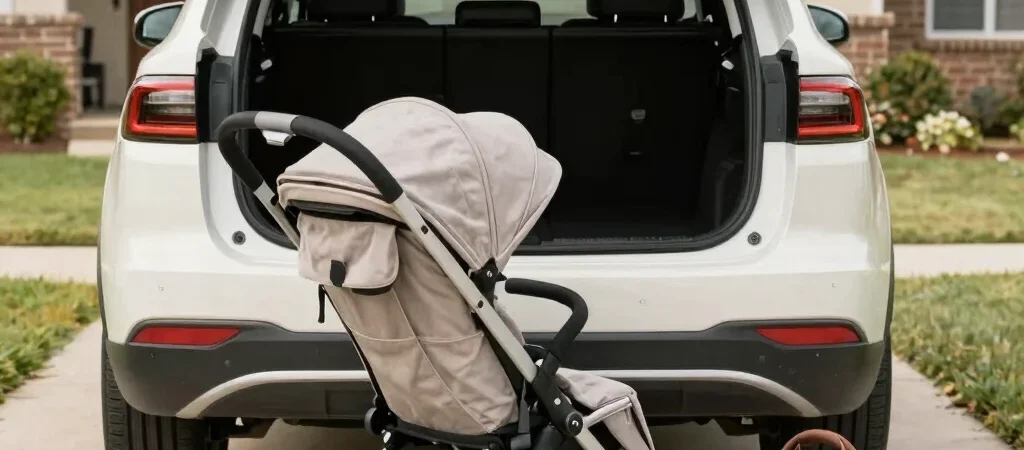
Picture your usual Tuesday: a grocery run, a few steps up to the porch, or a stroller folded beside a crowded trunk. Those details often tell you more than a long list of bells and whistles. Start with where the stroller will go and who will lift it.
Start With Your Daily Routes
If you’ll navigate narrow aisles, apartment hallways, or busy sidewalks, consider the stroller’s width and turning space alongside its folded size. For suburban errands, trunk fit and how easily the frame lifts may be the deciding factors. Measure your doorway, storage spot, and vehicle opening instead of guessing from product photos.
Think about the surfaces you actually cover, too. Small wheels can be convenient for compact storage, while larger wheels may suit rougher paths better, but a feature alone can’t tell you how a particular model will feel. When possible, compare the folded frame, handle position, and storage access in person.
Compare the Trade-Offs
A lighter frame may be easier to carry, while a larger basket or more adjustable features can add bulk. A travel system can simplify transitions for some families, but it still needs to fit your car, storage space, and routine. Make a short list of the two or three features you’ll use often, then treat the rest as optional.
Verify Newborn Compatibility
Don’t assume every stroller seat is suitable from birth just because it reclines. Check the manufacturer’s instructions for the child’s age, size, and required configuration, including whether a specific bassinet or compatible infant car seat is needed. Airline stroller policies also vary, so confirm directly with your carrier before a trip.
Our product guides explain features and trade-offs rather than claiming hands-on tests we haven’t conducted. Some links may be affiliate links, meaning Mommy’s Little World could earn a commission at no extra cost to you; that doesn’t replace checking the current product manual and fit for your family. Before deciding, write down your route, storage constraints, and newborn-use requirements—that’s a more useful shortlist than chasing every feature.